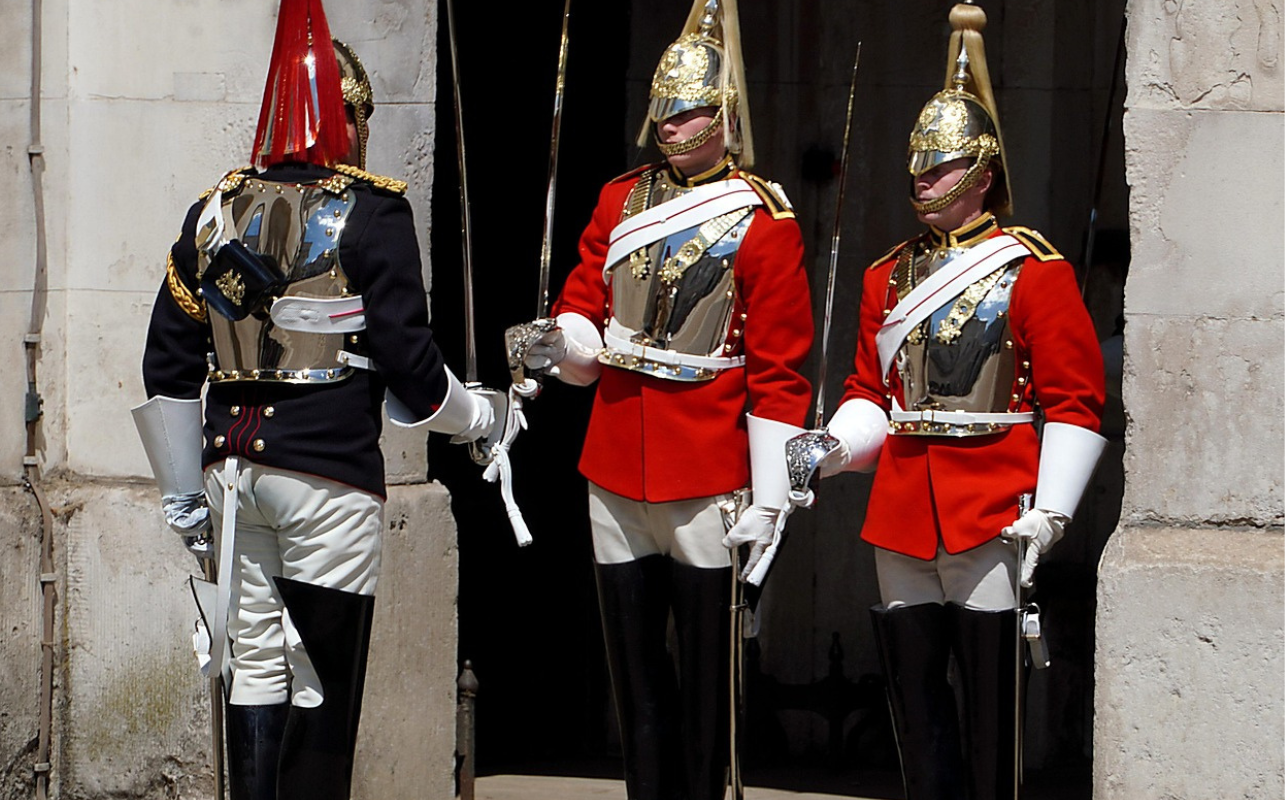
Changing of the Guard History - Over 500 Years of Royal Protection
The Changing of the Guard at Buckingham Palace is not just London's most iconic free event — it is a living, breathing piece of British military and royal history stretching back over 500 years. Every time the King's Guard marches through the gates of Buckingham Palace, it is continuing an unbroken tradition of royal protection that began in the reign of King Henry VII in the late 15th century.
Understanding that history transforms what you see from a colourful ceremony into something far more remarkable.
The Origins — King Henry VII and the Birth of the Royal Guard (1485)
After winning the Battle of Bosworth Field on 22 August 1485, Henry VII created the Yeomen of the Guard — establishing what would become Britain's oldest military corps still in existence. Henry VII had powerful reasons to act. He had seized the throne by force at the conclusion of the Wars of the Roses, a decades-long civil conflict in which powerful English noblemen had commanded their own private armies and kings had been deposed and killed. A permanent, professional Royal Guard was not a luxury — it was a political and physical necessity. Unlike his predecessors, who relied on temporary personal retainers, Henry established a bodyguard that would serve the office of the Crown itself — not just the individual monarch. The first official record appears in a warrant dated 18 September 1485. This was the founding innovation that still defines the King's Guard today: elite soldiers who serve the Crown as an institution, regardless of who wears it. That principle has now endured for over 540 years.
The Civil War, Exile, and the Foot Guards (1649–1660)
The story of the Changing of the Guard was almost ended before it began. During the English Civil War, King Charles I was executed in 1649 and Britain became a republic under Oliver Cromwell. The monarchy was abolished — but the Royal Guard was not. The Yeomen of the Guard accompanied the exiled Charles II to France, maintaining their role as royal bodyguards even without a throne to protect. Simultaneously, Cromwell's own military force — the New Model Army — was creating the first permanent standing infantry regiments in British history. It is from this period that the modern Foot Guards trace their origins. The first Guards Regiments were raised in 1656 to protect the exiled King Charles II, forming the foundational units of what would become the Household Division. When Charles II was restored to the throne in 1660, he returned to London in triumph, bringing his bodyguard with him. He also established new guard regiments during this period, including the Life Guards (cavalry) and what would become the Grenadier Guards. The five Foot Guards regiments you see at the Changing of the Guard today — the Grenadier Guards, Coldstream Guards, Scots Guards, Irish Guards, and Welsh Guards — are all direct descendants of units formed in this period of civil war and royal restoration. They are among the oldest units of the British Army and have fought with great distinction in nearly every major conflict involving soldiers of the United Kingdom since the 17th century.
From Whitehall Palace to St. James's Palace (1660–1837)
The Changing of the Guard ceremony has always followed the official residence of the sovereign — and for most of its history, that residence was not Buckingham Palace. When Charles II was restored, the Royal Court returned to its primary London home: the Palace of Whitehall, located along the River Thames between Westminster and the City. This was where the King's Life Guard — the Household Cavalry — were stationed, and where the guard-changing ceremony first took formal shape. The Household Cavalry guards Horse Guards Parade to this day, on the very site of the old Whitehall Palace. Whitehall Palace was almost entirely consumed by fire in 1698 during the reign of William III, and the official royal court moved to St. James's Palace. The ceremony moved with it. When the court moved to St. James's Palace in 1698, the Changing of the Guard went with them. St. James's Palace — located off The Mall on Marlborough Road — became the new ceremonial heart of the Guard Mounting. This is why, to this day, St. James's Palace remains the official court of the British sovereign. Foreign ambassadors are still formally accredited to the "Court of St. James's" — a direct legacy of this period. And it is why the Changing of the Guard ceremony begins at St. James's Palace, in Friary Court, at 10:25am every ceremony day — not at Buckingham Palace.
Queen Victoria, Buckingham Palace, and the Modern Ceremony (1837–Present)
The ceremony arrived at its modern home in 1837, when Queen Victoria moved into Buckingham Palace — making it the principal royal residence in London for the first time. A detachment of guards was sent to guard the Palace, with the Queen's Guard also still guarding St. James's Palace — a situation which continues today. This arrangement — the King's Guard split between Buckingham Palace and St. James's Palace — explains the structure of the entire modern ceremony. The Old Guard detachment forms up at St. James's Palace in Friary Court before marching down The Mall to Buckingham Palace. The New Guard assembles at Wellington Barracks on Birdcage Walk before marching to relieve them. The ceremony on the Palace forecourt formalises the handover of responsibility for protecting both royal residences simultaneously. The King's Guard is the name given to the contingent of infantry responsible for guarding Buckingham Palace and St. James's Palace (including Clarence House) in London. Because the sovereign's official residence is still St. James's, the guard commander — the Captain of the Guard — is based there, as are the regiment's Colours.
The King's Guard Today — Active Soldiers, Not Ceremonial Performers
One of the most important facts about the Changing of the Guard that most visitors don't know: the soldiers you are watching are fully operational, combat-trained members of the British Army — not ceremonial performers. The King's Guard is not purely ceremonial. They provide sentries during the day and night, and during the later hours they patrol the grounds of the Palace. When the Sovereign is in residence, the King's Guard numbers three officers and forty other ranks, with four sentries posted at Buckingham Palace (on the forecourt) and four at St. James's Palace (two in Friary Court, two at the entrance to Clarence House). This reduces to three officers and 31 other ranks, with two sentries each, when the Sovereign is not in residence.