The Royal Palaces
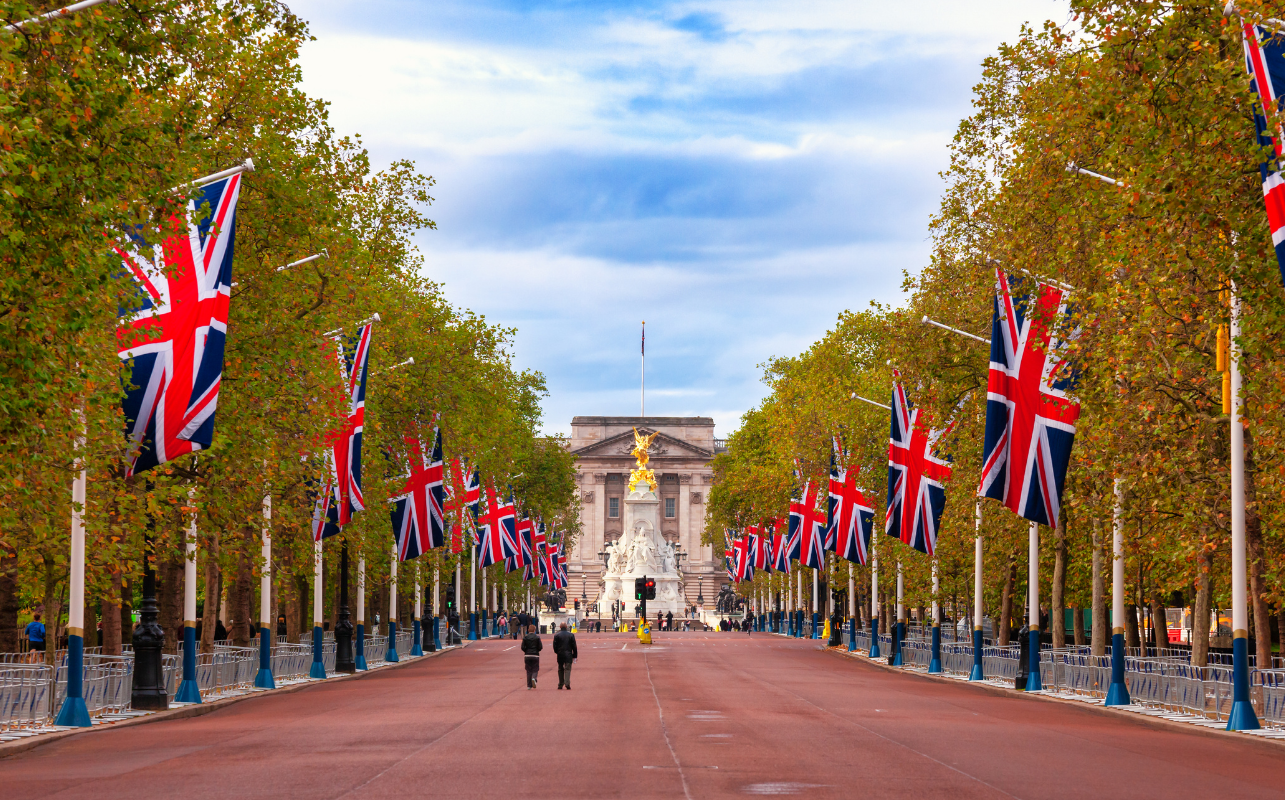
Buckingham Palace, St James's Palace, and Clarence House form the most historically significant royal corridor in the world. Together, they span nearly 500 years of British monarchy — from Henry VIII's Tudor redbrick gatehouse to King Charles III's elegant Regency residence. Each palace has shaped the nation's history, and each plays a living, active role in London's most iconic ceremony: the Changing of the Guard. The Old Guard assembles at St James's Palace, marches past Clarence House, and hands over responsibility for protecting the sovereign at Buckingham Palace — three palaces, one unmissable ceremony.

Buckingham Palace: London's Iconic Royal Residence
Buckingham Palace — the official London residence and working headquarters of the British Monarch — is one of the most recognised and visited landmarks in the world. Located in the City of Westminster, at the heart of central London, this magnificent royal palace sits at the confluence of The Mall, St James's Park, and Green Park, making it the undisputed centrepiece of the United Kingdom's constitutional monarchy and the world's most famous stage for royal ceremony.
A Royal Residence with 320 Years of History
Originally built in 1703 as a grand townhouse for the Duke of Buckingham, the property was acquired by King George III in 1761 as a private residence for Queen Charlotte — earning it the early name The Queen's House. It was transformed into a palace by the celebrated architect John Nash under the commission of King George IV in the 1820s, with the iconic east façade redesigned in 1913 by Sir Aston Webb as a backdrop for the Queen Victoria Memorial — the golden statue that still frames every visitor's first view of the palace today.
Queen Victoria became the first monarch to reside at Buckingham Palace in 1837, a tradition upheld by every British sovereign since. Today, His Majesty King Charles III uses the palace as the administrative headquarters of the Crown, hosting State Banquets, Investitures, Privy Council meetings, and Royal Garden Parties that welcome over 50,000 guests each year.
Inside Buckingham Palace: Facilities & State Rooms
With 775 rooms — including 19 magnificent State Rooms, 52 Royal and guest bedrooms, 78 bathrooms, 188 staff bedrooms, and 92 offices — Buckingham Palace is one of the largest working palaces on earth. Its grounds extend across nearly 40 acres, with a private 39-acre garden, a lake, tennis courts, and a cricket pitch concealed behind its famous façade.
Beyond the grandeur, the palace functions as a self-contained working estate: it houses a post office, a cinema (built 1929), a swimming pool, a doctor's surgery, a jeweller's workshop, and a Coutts ATM. The Royal Mews — celebrating its 200th anniversary in 2025 — stables the horses and houses the Gold State Coach (1762) and other carriages used in coronations and royal processions. The Queen's Gallery, open year-round, exhibits masterworks by Rembrandt, Vermeer, and da Vinci from the Royal Collection.

St James's Palace: London's Most Senior Royal Palace
St James's Palace — the most senior royal palace in the United Kingdom and the official seat of the British Royal Court — is one of London's oldest, most historically significant, and least understood royal landmarks. Standing just a few hundred metres from Buckingham Palace at the top of The Mall in the City of Westminster, this magnificent Tudor redbrick palace has been at the centre of British royal history for nearly 500 years. It is also an indispensable — and often overlooked — location in the Changing of the Guard ceremony, one of London's most iconic and most-searched free attractions.
A Royal Palace Built by Henry VIII
St James's Palace was built between 1531 and 1536 by King Henry VIII on the former site of the Hospital of St James — a medieval leper hospital dedicated to Saint James the Less. Henry enclosed 300 acres of surrounding land as a hunting park, which survives today as St James's Park, the oldest of London's Royal Parks.
Much of the original red-brick Tudor building still survives, including the Chapel Royal and the iconic Great Gatehouse — flanked by polygonal turrets with mock battlements — which remains one of the finest examples of Tudor architecture in London and the most-photographed face of the palace.
After the Palace of Whitehall burned down in 1698, St James's Palace became the principal residence of the monarch and took on the administrative functions of the monarchy, a role it held for over 150 years. It served as the official residence of Kings and Queens of England for over 300 years, from Henry VIII until the reign of Queen Victoria, when Buckingham Palace assumed that role in 1837.
The Most Senior Royal Palace in the United Kingdom
Although the sovereign no longer resides at St James's Palace, it retains a constitutional and ceremonial importance that no other royal palace can match. It remains the ceremonial meeting place of the Accession Council — the body that formally proclaims a new monarch — and the office of the Marshal of the Diplomatic Corps.
Most significantly, foreign ambassadors and high commissioners to the UK are still officially accredited to the "Court of St James's" — a title rooted in five centuries of royal history that confirms this palace as the formal seat of the British monarchy, senior even to Buckingham Palace itself.
Today, St James's Palace is a busy working palace, hosting up to 100 receptions each year for charities associated with members of the Royal Family. It is also the London residence of Princess Anne, Princess Beatrice, and Princess Alexandra. The State Apartments are used for State Visit entertaining and other ceremonial occasions, while the Chapel Royal — where royal christenings have been held for centuries — remains open to the public for Sunday services.
Clarence House: London's Most Intimate Royal Residence & Home of King Charles III and Queen Camilla
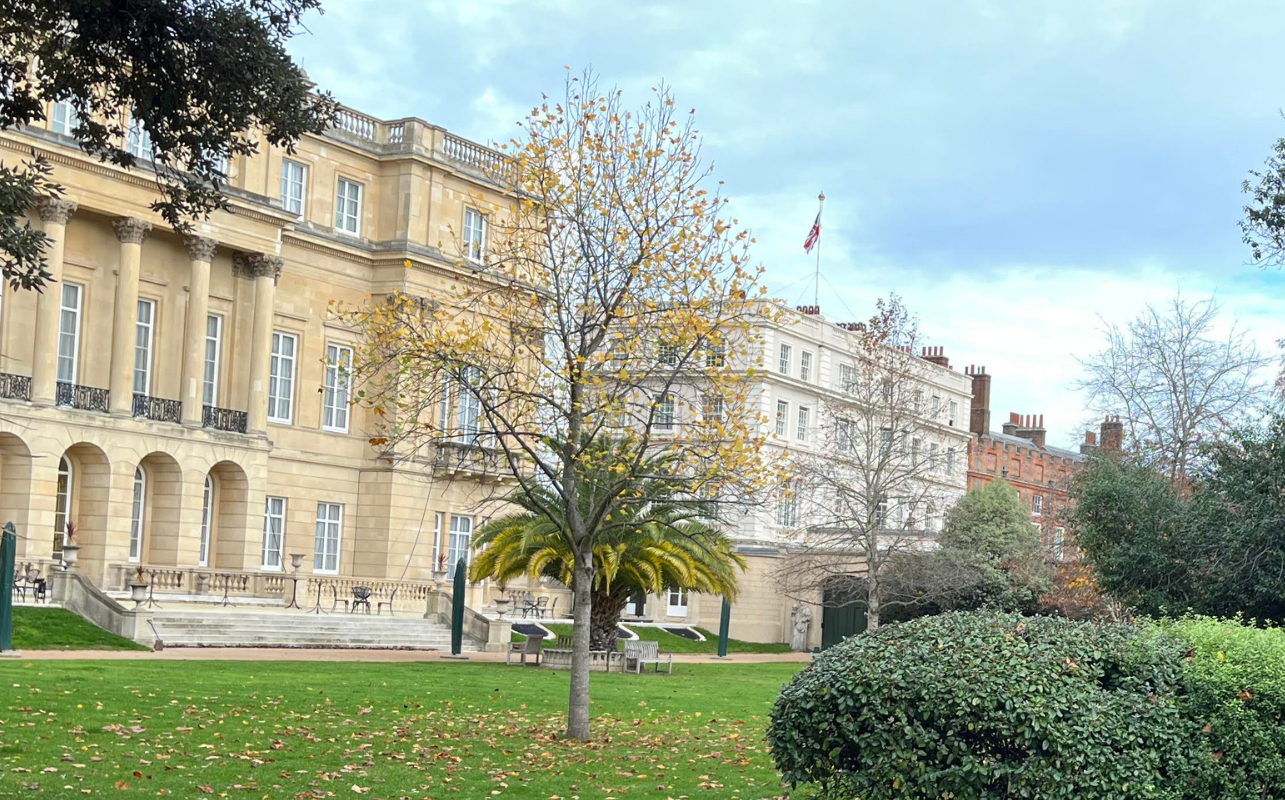
Clarence House — the official London residence of King Charles III and Queen Camilla — is one of the most historically rich and quietly compelling royal landmarks in the heart of London. Tucked beside St James's Palace on The Mall in the City of Westminster, this elegant Grade I listed Regency townhouse has been a private home to British royalty for two centuries. It sits at the very centre of the Changing of the Guard route, just steps from the ceremony's starting point at Friary Court, making it an unmissable landmark for anyone visiting Buckingham Palace and the surrounding royal palaces of London.
History of Clarence House: Built for a King, Loved by Generations
Clarence House was built between 1825 and 1827 to a design by the architect John Nash — the same architect behind the transformation of Buckingham Palace — commissioned by the Duke of Clarence, who in 1830 became King William IV. He moved there in preference to the adjoining St James's Palace, which he found too cramped as an antiquated Tudor building.
When he became king, William IV remained at Clarence House rather than moving to Buckingham Palace, and had John Nash create a direct passageway into the State Apartments of St James's Palace so he could conduct royal business. This passageway — connecting a private home directly to the ceremonial seat of the monarchy — is a detail that perfectly captures the unique character of Clarence House: intimate yet royal, domestic yet constitutional.
Over the following two centuries, Clarence House became the London residence of several members of the British royal family, including Princess Augusta Sophia, Queen Victoria's mother the Duchess of Kent, and two of Victoria's sons — Prince Alfred and Prince Arthur, Duke of Connaught. During the Second World War, Clarence House became the headquarters of the Red Cross and St John Ambulance Brigade after sustaining bomb damage during the Blitz.
From 1947, the house was the London residence of Princess Elizabeth and Philip, Duke of Edinburgh; their daughter Princess Anne was born there in August 1950. When Princess Elizabeth acceded to the throne as Queen Elizabeth II in 1952, she moved to Buckingham Palace — and Queen Elizabeth The Queen Mother took up residence at Clarence House, remaining there until 2002. For almost five decades, the Queen Mother's birthday appearances on the doorstep of Clarence House became one of the most beloved and enduring images in British royal life.
King Charles III moved in as Prince of Wales in 2003, and continues to use Clarence House as his London home during the ongoing renovation of Buckingham Palace, which is expected to be completed by at least 2027.
Inside Clarence House: Rooms, Art & the Queen Mother's Legacy
Clarence House is described as the last remaining great London house maintained in the purpose for which it was built — a genuine family home, rather than a state showpiece. Unlike the vast ceremonial rooms of Buckingham Palace, its scale is personal and its atmosphere warmly domestic.
The arrangement of the rooms and the grouping of their contents remain recognisably as they were in the Queen Mother's time, with much of her collection of works of art and furniture in their former positions. Clarence House displays outstanding 20th-century paintings including important works by John Piper, Graham Sutherland, WS Sickert and Augustus John, alongside superb examples of English porcelain and silver, particularly pieces relating to the Bowes-Lyon family.
The ground floor's principal rooms — the Lancaster Room, Morning Room, Library, Dining Room, and Garden Room — reflect both the Queen Mother's enduring taste and King Charles's own sensibility, with additions from the wider Royal Collection and the King's personal art collection woven throughout.